Academic Associates
The Centre has collaborated with researchers from other institutions or UBC Okanagan centres. Here we include them as Academic Associates.

University of Technology Sydney
Professor Cristina M. Caperchione is a physical activity and health researcher in the School of Sport, Exercise and Rehabilitation at University of Technology Sydney (UTS), Australia. She leads the health promotion discipline within the school and is subject coordinator in the areas of Health-related physical activity, Sport and Exercise Psychology, and Health and Lifespan Development. Prof Caperchione’s research program focuses on the use of behavioural change strategies and socio-cultural factors in the prevention, reduction and management of chronic disease. Specifically, her expertise lies in designing, implementing, and evaluating innovative community-based health promotion interventions, with a particular focus on healthy lifestyle behaviours (i.e., physical activity, healthy eating, and practices for improving mental health) of priority populations including cancer survivors, inactive men, and at-risk adolescent girls. Given the focus on community, a large component of Prof Caperchione’s work also involves building strong community relationships with industry partners and local community members.

Associate Professor
School of Health and Exercise Sciences, Faculty of Health and Social Development
Dr. Mary Jung is a Professor in the School of Health and Exercise Sciences at the University of British Columbia, Okanagan Campus. A major research interest is developing evidence-based diabetes prevention interventions designed for community implementation and sustainability, with a lens towards improving equity, diversity, and inclusivity in all research endeavours. Dr. Jung has received over $10 million dollars (Canadian) in competitive research funding as principal investigator for her studies on exercise adherence. Jung leads the Diabetes Prevention Research Group, is founder of the diabetes prevention program “Small Steps for Big Changes”, and is director of UBC’s Centre for Health Behaviour Change. Jung’s current research is examining the implementation and effectiveness of Small Steps for Big Changes as it scales up across 50 urban cities across 8 provinces in Canada, and the state of Queensland, Australia. Through this project, Jung and her research team will test how organizations can optimally implement a diabetes prevention program sustainably, factors associated with inclusive access, how effective the program is at reducing type 2 diabetes incidence in those living at high-risk of T2D, and how cost-effective the program is at reducing health care costs.
Contact Email: mary.jung@ubc.ca | For more information, please visit Dr. Jung’s Diabetes Prevention Research Group webpage here: http://dprg.ok.ubc.ca
Cardiff Metropolitan University
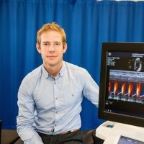
Mike is a Reader in Cardiovascular and Environmental Physiology within the Cardiff School of Sport and Health Sciences in the UK. His collaboration with the Centre for Heart, Lung and Vascular Health started in 2012 with the Nepal Everest Expedition where he investigated the short-term and life-long effects of high altitude exposure on cardiac physiology. Since then, Mike has collaborated with numerous members of the Centre including Prof Phil Ainslie, Prof Ali McManus, Prof Neil Eves, Dr Glen Foster and Prof Rob Shave. Since 2012, Mike’s transatlantic collaboration has co-authored 45 publications with members of the Centre and facilitated the bi-directional mobility of over 10 postgraduate students.
Mike’s research focuses on the integration of physiological systems during acute and chronic adaptation to exercise and environmental stimuli, and how these interactions change during natural periods of development such as adolescence. To explore these research interests, he has used a wide range of techniques in the assessment of cardiac, cerebrovascular, haematological and neurological physiology. These techniques have been applied in humans of all ages, often utilizing intricate interventions to isolate and manipulate specific mechanisms to help understand population differences observed.
Email: mstembridge@cardiffmet.ac.uk